

How to Detect AI Voice Scams and Deepfake Audio
Imagine answering your phone late at night and hearing the terrified voice of your son, begging for help because he has been arrested. Voice sounds exactly like his. The inflection, the panic, the...

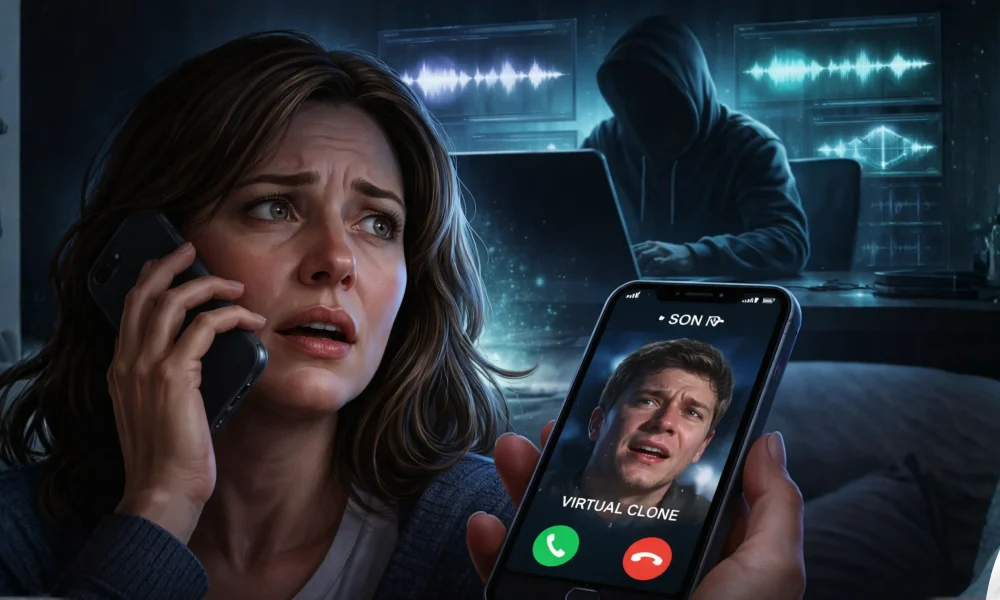
Imagine answering your phone late at night and hearing the terrified voice of your son, begging for help because he has been arrested. Voice sounds exactly like his. The inflection, the panic, the slight stutter it is perfectly identical. But your son is asleep in the next room. You have just experienced a highly targeted deepfake audio attack. As these synthetic cloning tools become cheaper and faster, mastering AI voice scam detection is no longer just for cybersecurity professionals; it is a critical survival skill for everyone.
Table Of Content
- What is AI Voice Scam Detection?
- How Scammers Clone Voices
- Audio Scraping Phase
- Cleaning and Processing
- Neural Network Training and Text-to-Speech (TTS)
- Real-Time Voice Conversion (RVC)
- Real-World Audio Scam Examples
- The Grandparent / Emergency Scam
- The CEO / Executive Wire Fraud
- Virtual Kidnapping Extortion
- How to Spot a Deepfake Audio Call
- Unnatural Breathing and Pacing (Prosody)
- Robotic Clipping and Audio Artifacts
- Lack of Situational Emotion
- Manufactured Background Noise Looping
- Evasion of Personal Questions
- Tools and Methods for Proactive Defense
- Implement a Family or Corporate Safe Word
- Strict Social Media Audio Hygiene
- The “Hang Up and Verify” Rule
- Utilize Call Filtering and Anti-Spoofing Apps
- Expert Insights on Deepfake Audio Defense
- Listen for the “Processing Delay”
- Ask Nonsensical or “Trap” Questions
- Limit Biometric Authentication
- Frequently Asked Questions
- Can a scammer clone my voice from a voicemail greeting?
- Is there software that can detect an AI voice on a live call?
- Why does my Caller ID show my family member’s exact name and number?
- What should I do if I realize I am on the phone with a cloned voice?
- Can they steal money just by recording me saying the word “Yes”?
- Are voice cloning tools illegal?
- Mastering AI Voice Scam Detection for Good
Threat actors only need three seconds of someone’s voice scraped from a TikTok video, an Instagram story, or a corporate webinar to create a hyper-realistic digital clone. Once they have that clone, they can force it to say whatever they type into a text box. The resulting financial losses are staggering, with individuals and corporations losing millions to these synthetic voice attacks.
This comprehensive guide will break down exactly how these sophisticated audio impersonations work. More importantly, we will provide you with actionable, technical, and psychological strategies to identify fake audio, protect your digital footprint, and keep your family or business safe from vocal cloning fraud.
The terrifying reality of AI voice cloning is that scammers often obtain their high-quality training data by quietly installing spyware on your smartphone to record your daily physical conversations. If you want to permanently cut off their access to your microphone and ensure your private executive discussions remain confidential, you must learn How to Remove Spyware from iPhone and Android | Definitive Executive Guide to Neutralizing Mobile Espionage.
What is AI Voice Scam Detection?
AI voice scam detection is the process of identifying synthetic, computer-generated audio used by cybercriminals to impersonate trusted individuals. It involves analyzing calls or voicemails for robotic artifacts, unnatural speech rhythms, missing emotional context, and unusual situational urgency. By combining technical awareness with strict verification protocols—like family safe words—individuals can intercept and block these fraudulent attempts before any money is transferred.
How Scammers Clone Voices
To effectively defend against an attack, you must first understand how the weapon is built. The technology behind deepfake audio has shifted from military-grade research labs to publicly available software within just a few years. Here is the exact pipeline scammers use to steal a voice.
Deepfake audio calls primarily target your mobile device, often attempting to trick you into revealing two-factor authentication codes or downloading malicious payloads hidden in text messages. If you recently interacted with a highly suspicious caller and are worried your device’s security has been compromised, discover the crucial red flags in our Signs Your iPhone is Hacked | 2026 Update.
Audio Scraping Phase
Scammers cannot clone what they cannot hear. The first step involves gathering high-quality audio data of the target. Cybercriminals deploy automated scraping bots to pull audio from public sources. This includes YouTube channels, podcasts, public speaking engagements, and social media reels. Even a seemingly harmless voicemail greeting can provide enough acoustic data for a baseline model.
Cleaning and Processing
Raw audio is rarely perfect. It contains background noise, wind interference, or other voices. Attackers use AI-driven noise cancellation tools to isolate the target’s specific vocal frequencies. They strip away the background, leaving a clean, sterile a cappella track. This clean track acts as the “training data” for the neural network.
Neural Network Training and Text-to-Speech (TTS)
The cleaned audio is fed into a generative AI model. These models analyze the unique biometric markers of the voice: the pitch, the timbre, the natural resonance of the vocal cords, and regional accents. Once the model maps these variables, the scammer can type any text into a software interface. The AI engine then renders that text out loud, synthesizing a brand-new audio file that perfectly mimics the original speaker.
Real-Time Voice Conversion (RVC)
While early deepfakes were pre-recorded, modern attackers utilize Real-Time Voice Conversion (RVC). This software acts as an advanced digital mask. The scammer speaks into their own microphone, and the software instantly translates their speech into the cloned voice on the live call. This allows for dynamic, two-way conversations that easily bypass standard suspicion.
Real-World Audio Scam Examples
Deepfake audio attacks generally rely on high-stress, high-urgency scenarios. By triggering a panic response, the scammer shuts down the victim’s critical thinking. Let’s look at the most common deployment methods and the audio recordings typically used.
While AI voice cloning is a terrifying concept on its own, it becomes even more dangerous when combined with unsecured smart speakers. Hackers who breach your home network can hijack compromised IoT devices to silently listen in on your daily conversations, gathering the perfect, high-quality audio samples needed to create convincing deepfakes. Secure your physical environment by recognizing the Signs Your Smart Home Hacking Symptoms | IoT Devices Are Hacked.
The Grandparent / Emergency Scam
This is the most devastating and emotionally manipulative tactic. Scammers target older individuals, pretending to be a grandchild in immediate physical or legal danger.
- The Setup: The scammer calls late at night or during working hours when verification is difficult.
- Example Audio Script: “Grandpa, please don’t tell mom, but I was in an accident and they arrested me. I need bail money right now or they are moving me to a state facility. Please help me.”
- The Catch: The audio will often feature simulated background noise—like sirens or muffled police voices to mask any minor imperfections in the AI-generated voice.
The CEO / Executive Wire Fraud
In the corporate world, this is known as Business Email Compromise (BEC), but it has evolved into Business Voice Compromise (BVC). Attackers target finance departments or mid-level managers.
- The Setup: An employee receives a call from the “CEO” who is supposedly traveling or in a highly confidential meeting.
- Example Audio Script: “Listen, I’m stepping into a board meeting regarding an unannounced acquisition. I need you to wire $250,000 to the escrow account I just emailed you. Do not discuss this with anyone, it’s strictly confidential.”
- The Catch: The scammer leverages corporate authority and the fear of getting fired. They use brief, authoritative, pre-recorded audio snippets played from a soundboard if they aren’t using real-time conversion.
Virtual Kidnapping Extortion
This is the most terrifying variation. Scammers clone the voice of a loved one and simulate a kidnapping scenario.
- The Setup: The victim answers the phone to hear their spouse or child screaming or crying.
- Example Audio Script: “They have me! Please just do what they say, please!” followed by a different voice taking over the call to demand a crypto ransom.
- The Catch: Emotionally heightened audio (screaming, crying) is notoriously difficult for AI to render perfectly, so the audio is usually brief and distorted on purpose to hide the robotic nature of the generation.
How to Spot a Deepfake Audio Call
Despite the rapid advancement of neural networks, AI voice models are not flawless. They still leave behind acoustic fingerprints and behavioral red flags. Knowing what to listen for is the foundation of effective
AI voice scam detection.
How do these AI scammers know your name, phone number, and personal details in the first place? In most cases, this data is harvested from massive databases sold on the dark web after a corporate breach. To find out if your contact information is actively circulating among cybercriminals and being used to fuel these scams, learn How to Check if Your Email Was Leaked.
Unnatural Breathing and Pacing (Prosody)
Human speech is intrinsically tied to our lungs. We pause to breathe, we sigh, and the volume of our voice drops as we run out of breath at the end of a long sentence. AI models often struggle with “prosody”—the rhythm, stress, and intonation of speech. If the caller delivers a long, continuous stream of words without taking a natural breath, or if the pauses feel mathematically precise rather than organic, you are likely listening to a machine.
Robotic Clipping and Audio Artifacts
When an AI model attempts to pronounce complex phonetic combinations or transitions between certain vowels, it can glitch. Listen for metallic or robotic “clipping” sounds at the edges of words. Sometimes, a cloned voice will sound as if it has a slight echo, or sounds like two voices layered perfectly on top of one another (a phenomenon known as phasing).
Lack of Situational Emotion
While an AI can be prompted to sound “sad” or “angry,” it cannot dynamically adjust its emotion to the context of the conversation. If you say something shocking during the call, and the voice on the other end responds with a flat, unaffected tone before resuming its script, it is a massive red flag. The emotional delivery will often feel disconnected from the words being spoken.
Manufactured Background Noise Looping
To cover up the fact that a voice was generated in a sterile digital environment, scammers will layer artificial background noise over the call—such as a static-heavy bad connection, traffic sounds, or a busy hospital lobby. If you listen closely, you might notice that this background noise loops continuously in an exact pattern, or that it completely drops out the second the person stops talking.
Evasion of Personal Questions
Deepfakes cannot access your shared memories. If you ask the caller a specific, un-guessable question, the scammer operating the AI will stall. They might say, “I don’t have time for this, my battery is dying!” or the call might suddenly drop. They rely entirely on the script they have prepared.
Tools and Methods for Proactive Defense
Defeating these threats requires a combination of behavioral changes and technical safeguards. You cannot rely on antivirus software to stop a fraudulent phone call. Instead, you must build a resilient personal security posture.
Implement a Family or Corporate Safe Word
This is the single most effective low-tech defense against AI voice cloning. Establish a unique, memorable word or phrase with your family members and key financial personnel at your business. It should be something obscure that would never be guessed or found on social media (e.g., “Blueberry Pancake”). If someone calls claiming an emergency, your first response must be: “What is the safe word?” If they don’t know it, hang up immediately.
Strict Social Media Audio Hygiene
Scammers treat social media like a buffet for biometric data. You must limit the amount of high-quality audio you make public. Review your privacy settings on Instagram, TikTok, and Facebook. Make your accounts private where possible. If you must post public videos, consider overlaying background music; while advanced AI can strip music away, adding complex background noise makes the cloning process significantly harder and lowers the quality of the resulting deepfake.
The “Hang Up and Verify” Rule
If you receive a suspicious, urgent call from a known number, do not engage. Scammers use Caller ID spoofing software to make it look like the call is genuinely coming from your loved one’s phone. Hang up the phone immediately. Then, physically dial the person’s number yourself from your contacts list. If the real person answers and has no idea what you are talking about, you have successfully evaded the scam.
Utilize Call Filtering and Anti-Spoofing Apps
Mobile carriers are slowly catching up to this threat. Enable “Silence Unknown Callers” on your smartphone to send unrecognized numbers straight to voicemail. Additionally, you can utilize third-party call-blocking applications that cross-reference incoming numbers with databases of known spoofing origins. While this won’t stop a highly targeted spear-phishing attack, it will filter out mass-automated AI scam campaigns.
Expert Insights on Deepfake Audio Defense
To stay ahead of cybercriminals, you have to think like them. Here are advanced tactics used by cybersecurity professionals to neutralize synthetic audio threats.
Listen for the “Processing Delay”
Real-time voice conversion (RVC) requires massive computational power. When you speak to a scammer using a live voice filter, their software must capture their audio, process it through the neural network, and output the cloned voice. This creates a distinct, unnatural latency (lag) on the call. If there is consistently a 1 to 2-second delay between your question and their response, treat the call with extreme suspicion.
Ask Nonsensical or “Trap” Questions
If you suspect an AI scam, disrupt the scammer’s mental script. Ask a question that makes no logical sense in the context of your relationship. For example, if your “brother” calls asking for bail money, say, “Did you leave the green dog in the oven before you got arrested?” A real person will be profoundly confused and ask what you mean. A scammer, panicking behind a keyboard, might simply ignore the question and demand the money again, or blindly agree to keep the conversation moving forward.
Many modern AI voice scams are specifically designed to induce panic, convincing you to install “remote support” software or open malicious email attachments on your primary computer to fix a fake problem. If a convincing deepfake caller persuaded you to download anything onto your machine, you need to immediately look out for the 10 Hidden Symptoms of Malware on Your Laptop before your sensitive data is completely locked down.
Limit Biometric Authentication
Many banks and financial institutions offer “Voice ID” as a convenient way to log into your telephone banking. Disable this feature immediately. As voice cloning becomes indistinguishable from reality, biometric voice locks are essentially unsecured padlocks. Rely on strong, unique passwords and hardware-based two-factor authentication (like YubiKey) or authenticator apps instead of your voice.
Frequently Asked Questions
Can a scammer clone my voice from a voicemail greeting?
Yes. Three to five seconds of clear audio is all a modern AI model needs to create a passable clone. If your voicemail greeting includes your full name and a clear sentence (e.g., “Hi, you’ve reached John Smith, I can’t come to the phone right now…”), that is enough data for a basic synthesis attack.
Is there software that can detect an AI voice on a live call?
Currently, consumer-facing live detection software is in its infancy. While enterprise solutions use spectral analysis to look for digital artifacts in audio waveforms, the average smartphone user does not have a real-time deepfake detector built into their dialer. Your ears, intuition, and verification protocols remain your best defense.
Why does my Caller ID show my family member’s exact name and number?
This is due to Caller ID Spoofing. The global telecom infrastructure (specifically the SS7 protocol) is outdated and relies on trust. Scammers use VoIP (Voice over IP) services to manually type in the phone number they want to appear on your screen. Your phone simply matches that number to your contacts list and displays their name.
What should I do if I realize I am on the phone with a cloned voice?
Hang up immediately. Do not say anything else, do not argue with the scammer, and do not threaten them. The longer you stay on the line, the more of your own voice they can record. After hanging up, call your family member directly to verify they are safe, and consider warning other family members that a clone of that person’s voice is being used.
Can they steal money just by recording me saying the word “Yes”?
This is known as the “Say Yes” scam, and while it was highly publicized, its actual threat level is debated among experts. The fear is that scammers record you saying “Yes” to authorize verbal contracts or bank transfers. While rare, it is best practice to never answer unexpected questions (like “Can you hear me clearly?”) with a direct “Yes.” Instead, respond with “I can hear you, who is calling?”
Are voice cloning tools illegal?
The tools themselves are generally not illegal, as they have legitimate applications in the entertainment industry, audiobook narration, and accessibility for people who have lost their ability to speak. However, using these tools to commit fraud, impersonation, or extortion is a severe federal crime in almost every jurisdiction.
Mastering AI Voice Scam Detection for Good
The digital landscape is evolving rapidly, and the line between reality and simulation is blurring. However, the foundational rules of security remain unchanged. Scammers rely on panic, urgency, and the assumption of trust. By slowing down, questioning the context of the situation, and deploying simple verification tools like family safe words, you strip the attacker of their power.
Falling for a sophisticated AI voice scam can quickly lead to compromised accounts, financial loss, and stolen identity. However, deepfake social engineering is just one of many methods cybercriminals use to target you today. If you suspect that a recent suspicious call might have led to a broader security breach across your accounts, be sure to read our comprehensive masterclass on How to Know If You’ve Been Hacked | Complete 2026 Guide.
You cannot stop threat actors from scraping audio or building malicious tools, but you can absolute control how you react when the phone rings. Effective AI voice scam detection is ultimately about maintaining situational awareness. Trust your instincts, protect your digital footprint, verify every urgent request, and never let fear dictate your financial decisions. Stay vigilant, educate your vulnerable family members today, and make your inner circle a hardened target against synthetic audio fraud.






No Comment! Be the first one.