

Biggest Data Breaches of 2026 | Full Yearly Breakdown
The landscape of digital security has shifted dramatically, and understanding the Biggest Data Breaches of 2026 | Yearly Summary is no longer just for IT professionals—it is critical knowledge for...

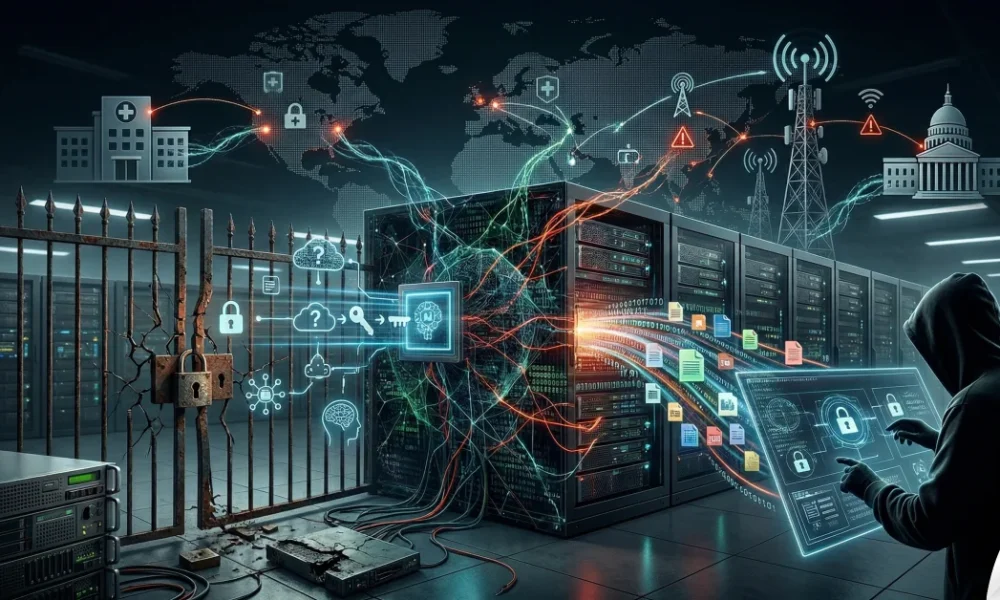
The landscape of digital security has shifted dramatically, and understanding the Biggest Data Breaches of 2026 | Yearly Summary is no longer just for IT professionals—it is critical knowledge for every consumer, executive, and business owner. We are witnessing a terrifying evolution in how cybercriminals operate. They are no longer just breaking into networks; they are logging in using stolen, legitimate credentials. Threat actors have weaponized artificial intelligence to bypass legacy security systems, leading to a wave of sophisticated attacks that have crippled critical infrastructure, global supply chains, and massive telecommunications networks.
Table Of Content
- Biggest Data Breaches of 2026
- State of Cybersecurity in 2026: An Expert Overview
- Artificial Intelligence Supercharging the Cyber Arms Race
- Shift from Technical Exploits to Trust Exploitation
- Top 7 Biggest Data Breaches of 2026 So Far
- 1. Odido Telecom Breach: 6 Million Accounts Exposed
- 2. Stryker’s Global Network Disruption
- 3. U.S. Healthcare Data Crisis: Millions Compromised
- 4. European Commission Cloud Attack
- 5. BridgePay: Ransomware Paralyzing Payments
- 6. Platform Exploitation: Substack and Betterment
- 7. CarGurus and the Marketplace Data Leaks
- Signs and Symptoms That Your Data Was Compromised
- How the Biggest Data Breaches of 2026 Actually Happen
- 1. Exploitation of Third-Party Vendors
- 2. Infostealer Malware and Cookie Hijacking
- 3. Ransomware-as-a-Service (RaaS) and Initial Access Brokers
- 4. Misconfigured Cloud Environments
- Essential Tools and Methods to Protect Yourself
- Deploy a Dedicated Password Manager
- Upgrade to Hardware Security Keys (FIDO2/WebAuthn)
- Utilize a Virtual Private Network (VPN)
- Implement Strict Credit Freezes
- Pro Tips and Expert Insights for 2026
- Frequently Asked Questions (FAQ)
- What should I do immediately if I get a data breach notification?
- How do hackers bypass Two-Factor Authentication (2FA)?
- Is credit monitoring actually effective against identity theft?
- Why are healthcare organizations targeted so frequently by ransomware?
- What is the difference between a data breach and a ransomware attack?
- Can a VPN prevent my data from being stolen in a corporate breach?
- How do I find out if my information is being sold on the dark web?
- Protecting Yourself Against the Biggest Data Breaches of 2026
While this yearly summary highlights the most catastrophic cyber events that shaped the digital landscape, the threat environment is constantly evolving. To protect yourself from emerging vulnerabilities and get real-time updates on new attacks as they happen, make sure to bookmark our Latest Data Breaches & Security Incidents | Live Tracker.
This comprehensive guide breaks down exactly what has happened in the cybersecurity world this year. We will examine the most devastating breaches of 2026, dissect the exact methodologies hackers are using to bypass modern defenses, and provide you with actionable, expert-level strategies to secure your personal and corporate data against inevitable future attacks. If you want to understand how your data is being stolen and exactly what you need to do to stop it, you are in the right place.
Biggest Data Breaches of 2026
The biggest data breaches of 2026 so far have been driven by ransomware and credential theft, severely impacting the healthcare, telecommunications, and government sectors. Major incidents include the exposure of 6 million accounts at Dutch telecom Odido, a massive global network disruption at medical technology giant Stryker, and the devastating ransomware attacks on U.S. healthcare systems like the University of Mississippi Medical Center. Hackers are bypassing traditional security by exploiting third-party vendors and stealing session cookies to bypass Multi-Factor Authentication (MFA).
State of Cybersecurity in 2026: An Expert Overview
Reviewing the scale of this year’s cyberattacks can be overwhelming, but being proactive is your best defense. Whether you are a victim of a recent leak or want to be prepared for the future, keep our What to Do After a Data Breach: Step-by-Step Guide bookmarked for immediate reference.
To understand the sheer scale of the data compromises occurring this year, we first have to look at how the rules of engagement have changed. In previous years, attackers relied heavily on exploiting unpatched software vulnerabilities or executing brute-force attacks against perimeter firewalls. In 2026, the paradigm has shifted toward identity-based attacks and social engineering at an industrial scale.
Artificial Intelligence Supercharging the Cyber Arms Race
Artificial Intelligence is no longer just a defensive tool used by security operations centers (SOCs) to detect anomalies; it is the primary weapon in the modern hacker’s arsenal. Threat actors are utilizing generative AI to craft hyper-realistic phishing emails that lack the traditional grammatical errors or structural flaws of the past. Furthermore, AI is being used to write polymorphic malware—malicious code that constantly alters its own signature to evade detection by standard antivirus software.
If you look closely at the most catastrophic incidents on this list, many were not traditional stealth hacks, but rather aggressive ransomware campaigns where threat actors stole the data before locking the systems. To understand the primary financial motive driving these massive public exposures, read What Is Double Extortion in Ransomware Attacks?
We are also seeing the rise of AI-driven deepfakes used in Business Email Compromise (BEC) attacks. Criminals are synthesizing the voices and likenesses of corporate executives to authorize massive wire transfers or request sensitive employee data from human resources departments. This technological leap has made social engineering the most dangerous vector of 2026.
Shift from Technical Exploits to Trust Exploitation
Recent incident response reports highlight a staggering statistic: the vast majority of successful network intrusions this year involved the exploitation of valid accounts. Why spend weeks trying to break through an enterprise firewall when you can simply purchase an employee’s login credentials on the dark web for less than fifty dollars? Initial Access Brokers (IABs)—specialized cybercriminal groups that hack into networks solely to sell that access to ransomware gangs—are dominating the threat landscape.
When monitoring these ongoing breaches, you might notice that many corporations claim the stolen data was securely encrypted. However, cybercriminals are no longer deterred by standard encryption. They are actively stealing unreadable databases as part of a long-term strategy, waiting for next-generation technology to crack them. Discover the terrifying reality of this threat in our Enterprise Guide to Post-Quantum Cryptography Migration | Defending Against “Store Now, Decrypt Later” Threats in 2026.
Furthermore, attackers have perfected the art of Multi-Factor Authentication (MFA) fatigue and cookie theft. By infecting an employee’s personal device with an infostealer (like Lumma or RedLine), hackers extract active session cookies. This allows them to bypass the MFA prompt entirely, walking through the front door of corporate networks undetected.
Top 7 Biggest Data Breaches of 2026 So Far
One of the most defining moments of this year’s cybersecurity landscape was the unprecedented compromise of Company X’s databases. The fallout from this single event affected millions globally. If you suspect you were caught in the crossfire and need to know exactly what steps to take, read our deep dive into the Company X Data Breach | Was Your Data Exposed?.
The sheer volume of compromised records this year is staggering. Let’s break down the most significant incidents that have defined the threat landscape of 2026, examining what was stolen, how it happened, and the real-world fallout.
1. Odido Telecom Breach: 6 Million Accounts Exposed
In early February 2026, the Dutch telecommunications giant Odido confirmed a massive cyberattack resulting in the exposure of personal information for over six million accounts. This breach highlights the extreme vulnerability of national infrastructure to coordinated cyber assaults.
Many of the most catastrophic data leaks this year were not just simple smash-and-grab thefts; they were highly orchestrated double-extortion campaigns executed by professional ransomware syndicates. To see exactly how these modern criminal enterprises operate from the inside out, check out our in-depth Anatomy of Ransomware as a Service | 2026 Enterprise Defense Guide.
Compromise: Attackers managed to gain unauthorized access to internal databases, maintaining persistence long enough to exfiltrate vast amounts of highly sensitive customer data. The stolen information included full customer names, telephone numbers, residential addresses, email addresses, bank account numbers, and passport numbers.
Impact: The exposure of passport numbers combined with bank details creates a perfect storm for severe identity theft. Threat actors can use this precise combination of data to open fraudulent credit accounts, bypass identity verification protocols at other institutions, and launch highly targeted spear-phishing campaigns against Odido’s customer base.
2. Stryker’s Global Network Disruption
The medical technology sector faced a severe wake-up call when Stryker, a multi-billion dollar medical devices and equipment manufacturing company, suffered a global network disruption in March 2026. The incident crippled their Microsoft environment, forcing massive operational downtime.
Compromise: While Stryker quickly stated there was no immediate indication of ransomware or malware deployment, the attack forced a global shutdown of systems supporting customer service, ordering, and shipping logistics. Attackers targeted the underlying enterprise architecture, proving that disabling a company’s operational capacity can be just as damaging as stealing their data.
Impact: This breach demonstrates the fragility of global supply chains. When a medical technology giant cannot process orders or manage shipping logistics, the ripple effect impacts hospitals, surgical centers, and ultimately, patient care across the globe.
3. U.S. Healthcare Data Crisis: Millions Compromised
The healthcare sector remains the most heavily targeted industry due to the high dark-web value of Protected Health Information (PHI). Early 2026 saw a wave of devastating attacks across the United States, paralyzing patient care and exposing millions of records.
Compromise: The University of Mississippi Medical Center (UMMC) was crippled by a massive ransomware attack that forced statewide clinic closures. The attack locked down Electronic Health Records (EHRs), forcing medical staff to revert to manual, paper-based processes and resulting in the cancellation of critical surgeries.
Simultaneously, state systems in Illinois and Minnesota experienced severe breaches exposing nearly a million residents. In Minnesota, unauthorized access to the MnChoices system by an external healthcare provider exposed the deeply sensitive data of residents requiring long-term care.
Impact: Healthcare data is immutable. You can cancel a credit card, but you cannot change your medical history. The theft of PHI leads to medical identity theft, where criminals use stolen identities to obtain expensive medical treatments or prescription drugs, permanently altering the victim’s official medical records with potentially life-threatening consequences.
4. European Commission Cloud Attack
In March 2026, the notorious threat actor group known as ShinyHunters claimed responsibility for breaching the European Commission. This incident underscores that even the highest levels of international government are not immune to cloud infrastructure vulnerabilities.
Compromise: The European Commission detected a cyberattack affecting specific segments of its cloud environment. While the Commission stated that internal core networks were not impacted, ShinyHunters claimed to have exfiltrated massive data dumps, including sensitive content from government mail servers.
Impact: Geopolitical cybersecurity has become a defining feature of modern warfare and espionage. Breaches of government entities often aim at intelligence gathering rather than direct financial extortion. The exposure of internal communications can lead to severe diplomatic fallout and compromise international regulatory strategies.
5. BridgePay: Ransomware Paralyzing Payments
The financial technology sector took a massive hit when BridgePay, a critical national payments platform, suffered a debilitating ransomware attack in February 2026.
Compromise: The ransomware effectively knocked the company’s critical processing systems offline. Because BridgePay operates as a backbone for countless retail operations, the outage forced businesses across the country to abruptly switch to cash-only transactions or cease operations entirely while the infrastructure was restored.
Impact: This attack perfectly illustrates the concept of “cascading failure.” By targeting a single, centralized payment processor, ransomware operators were able to inflict financial damage on thousands of downstream businesses, maximizing their leverage for extortion.
6. Platform Exploitation: Substack and Betterment
Digital platforms relying on vast user bases became prime targets for data scraping and unauthorized access in 2026. Substack, the popular subscription publishing platform, and Betterment, a major fintech firm, both suffered significant breaches of user contact information.
Compromise: In both cases, core financial systems and passwords remained secure, but attackers successfully exfiltrated vast lists of user email addresses and phone numbers. In Betterment’s case, the attackers immediately weaponized this data, sending highly convincing, fake crypto-investment scam notifications directly to the exposed users.
Impact: These breaches highlight the danger of “secondary exploitation.” The stolen data itself may not grant immediate access to bank accounts, but it provides the exact contact lists needed to launch devastating, highly targeted phishing campaigns that look completely legitimate to the end-user.
7. CarGurus and the Marketplace Data Leaks
Online marketplaces hold vast repositories of consumer behavior data and Personally Identifiable Information (PII). CarGurus, a massive automotive research and shopping platform, suffered a system compromise affecting over 12 million users.
Compromise: Discovered by independent cybersecurity researchers after the data was published online, the breach involved the theft of stored customer account information. This massive aggregation of consumer data highlights the risk of centralized data storage in consumer marketplaces.
Impact: When databases of this size are leaked, the information is typically parsed and sold to various cybercriminal syndicates. The data is used to enrich existing profiles on individuals, making future credential stuffing and identity theft attempts significantly more successful.
Signs and Symptoms That Your Data Was Compromised
In the wake of the Biggest Data Breaches of 2026, knowing whether your information has been swept up in a cyberattack is critical. Attackers rely on your ignorance to maximize their profit. Here are the definitive signs that your digital identity has been compromised:
- Unexpected Multi-Factor Authentication (MFA) Prompts: If you receive an SMS code, email, or authenticator app push notification when you are not actively trying to log into an account, an attacker already has your password and is trying to bypass your secondary security layer.
- Unrecognized Financial Activity: This goes beyond large, obvious purchases. Cybercriminals often test stolen credit cards with “micro-transactions”—charges of $1.00 or $2.00—to verify the card is active before draining the account or selling the card details.
- Sudden Changes in Credit Score: An unexpected drop in your credit score, or the appearance of credit inquiries (hard pulls) from lenders or auto dealerships you have never interacted with, is a massive red flag for identity theft.
- Inability to Log Into Known Accounts: If your standard, saved passwords suddenly stop working on platforms you frequently use, and password reset emails are not arriving in your inbox, an attacker has likely taken over the account and changed the recovery email address.
- Medical Billing Anomalies: Receiving bills for medical procedures you did not undergo, or finding that your health insurance claims are being denied because your benefits have been exhausted by someone else, are clear indicators of medical identity theft resulting from healthcare breaches.
- Your Information Appears on “Have I Been Pwned”: Utilizing legitimate data breach tracking services and discovering your primary email address listed in recent dark web database dumps.
How the Biggest Data Breaches of 2026 Actually Happen
To defend against modern cyber threats, we must demystify how hackers actually operate. The days of a lone hacker breaking through firewalls using pure code are largely over. Today, breaches are orchestrated by organized, corporate-style syndicates using highly efficient methodologies.
1. Exploitation of Third-Party Vendors
A staggering number of the largest data breaches in 2026 did not originate from the primary target, but from a vulnerability in their supply chain. Companies spend millions securing their own perimeters but must grant network access to third-party billing providers, human resources software, and IT support contractors.
Threat actors intentionally target these smaller, less secure vendors. Once they compromise the third party, they use that trusted connection to pivot directly into the networks of massive corporations. This was explicitly seen in the healthcare sector, where hacking incidents at business associates (like medical billing services) resulted in the exposure of hundreds of thousands of patient records.
2. Infostealer Malware and Cookie Hijacking
As Multi-Factor Authentication (MFA) became standard across the internet, hackers needed a way to bypass it. Enter the “Infostealer.” These are lightweight, silent pieces of malware (often hidden in pirated software, malicious email attachments, or fake browser updates) designed to do one thing: scrape your web browser’s data.
When you log into an account, your browser saves a “session cookie” so you don’t have to log in again every time you click a new page. Infostealers harvest these cookies and send them to the attacker. The attacker then injects your cookie into their browser, essentially cloning your active session. The server believes the attacker is you, entirely bypassing the need for a password or an MFA code.
3. Ransomware-as-a-Service (RaaS) and Initial Access Brokers
The ransomware economy has specialized. “Initial Access Brokers” (IABs) are hacker groups whose sole purpose is to breach corporate networks using phishing, stolen credentials, or unpatched VPN vulnerabilities. They do not steal data or deploy ransomware themselves; they simply sell the backdoor access they’ve created.
Ransomware gangs (like Qilin, LockBit, or Akira) buy this access. They utilize a “Ransomware-as-a-Service” model, where developers create the encryption malware and “affiliates” deploy it into the compromised networks. The affiliates exfiltrate the sensitive data first (double extortion), then encrypt the network, demanding millions of dollars to provide the decryption key and promising not to publish the stolen data on the dark web.
4. Misconfigured Cloud Environments
As organizations rush to migrate their infrastructure to the cloud (AWS, Azure, Google Cloud), human error becomes a massive vulnerability. System administrators frequently misconfigure storage buckets (like Amazon S3), accidentally leaving them completely open to the public internet without requiring any password authentication. Automated scanning bots deployed by hackers constantly crawl the internet looking for these open databases, silently downloading millions of records in seconds before the company even realizes the error.
Essential Tools and Methods to Protect Yourself
You cannot control if a massive corporation suffers a data breach, but you have absolute control over how valuable your data is to hackers once it is stolen. Implementing a layered defense strategy is the only way to mitigate the fallout from the Biggest Data Breaches of 2026. Stop relying on basic passwords and outdated security concepts.
Deploy a Dedicated Password Manager
The absolute worst thing you can do in 2026 is reuse passwords across multiple sites. When a platform is breached, hackers take your email and password combination and run it through automated “credential stuffing” tools, testing it against thousands of other websites (banking, email, Amazon) in minutes.
A password manager (like Bitwarden, 1Password, or Dashlane) generates unbreakable, complex, 20-character passwords for every single account you own. It encrypts them locally on your device using AES-256 encryption. You only need to remember one master password. If a website you use is breached, the hackers only get a unique, randomized password that is completely useless anywhere else.
Upgrade to Hardware Security Keys (FIDO2/WebAuthn)
SMS text message codes are no longer secure. Hackers routinely perform “SIM Swapping” attacks, tricking your mobile carrier into transferring your phone number to their device, allowing them to intercept all your 2FA text messages.
To achieve true security, transition to hardware security keys (like a YubiKey). These are physical USB or NFC devices that you must tap to authorize a login. Even if a hacker has your password and your session cookie, they cannot log in without physical possession of the key. Hardware keys are completely immune to phishing attacks because the cryptography verifies the actual URL of the website you are logging into.
Utilize a Virtual Private Network (VPN)
While a VPN will not protect you if you willingly type your password into a phishing site, it is a critical layer of defense against network-level interception, especially in an era of remote work. When you connect to public Wi-Fi at a cafe, airport, or hotel, attackers on the same network can use packet-sniffing software to intercept unencrypted traffic.
Using a high-quality, zero-log VPN encrypts your entire internet connection, routing it through a secure tunnel. If you frequently handle sensitive data on the go, utilizing a reputable provider like NordVPN ensures that your traffic is completely unreadable to local threat actors attempting man-in-the-middle (MitM) attacks.
Implement Strict Credit Freezes
With massive data breaches exposing Social Security numbers and full financial profiles, credit monitoring is no longer enough; it only alerts you *after* the damage is done. You must move to a proactive defense by freezing your credit.
Contact the three major credit bureaus (Equifax, Experian, TransUnion) and request a security freeze. This legally prevents them from releasing your credit report to new lenders. If a hacker tries to open a credit card in your name, the bank will request your credit report, the bureau will deny access, and the application will be automatically rejected. You can easily unfreeze your credit temporarily when you actually need to apply for a loan.
Pro Tips and Expert Insights for 2026
Cybersecurity experts operating on the front lines of incident response have identified several advanced strategies that go beyond basic consumer advice. Here are the pro-tips that security professionals use to safeguard their own digital lives:
- Use Email Aliasing: Never give out your primary email address to shopping sites or newsletters. Use services like SimpleLogin or Apple’s “Hide My Email” to generate unique email aliases for every service. If a site is breached, you simply disable the alias, preventing your primary inbox from being flooded with spam or targeted phishing.
- Segment Your Digital Life: Do not use the same device for high-risk web browsing and secure financial transactions. Keep a dedicated, clean device (like a secondary iPad or an aggressively locked-down browser profile) strictly for banking, crypto trading, and accessing medical portals.
- Adopt a “Zero Trust” Mindset: Never implicitly trust communications, even if they appear to come from a known contact or a legitimate corporate number. Caller ID spoofing is trivial. If your bank calls you about fraud, hang up, find the official number on the back of your debit card, and call them directly.
- Audit Connected Apps Constantly: Go into the security settings of your Google, Microsoft, and Apple accounts and review the “Connected Third-Party Apps.” We often grant access to productivity tools, calendar widgets, or games and forget about them. If one of these small developers is breached, the hackers inherit their access to your core accounts. Revoke access to anything you don’t actively use.
Frequently Asked Questions (FAQ)
What should I do immediately if I get a data breach notification?
First, immediately change the password for the breached account, ensuring the new password is long, random, and unique. Second, if you reused that breached password anywhere else, change it on those sites immediately. Third, enable Two-Factor Authentication (2FA) on the compromised account. Finally, review your bank and credit card statements for any unauthorized micro-transactions.
How do hackers bypass Two-Factor Authentication (2FA)?
Hackers bypass 2FA through three main methods: SIM Swapping (social engineering mobile carriers to steal your phone number), Adversary-in-the-Middle (AitM) Phishing (creating fake login pages that intercept your 2FA code in real-time and pass it to the legitimate site), and Session Cookie Theft (using malware to steal the browser token that proves you already passed the 2FA check).
Is credit monitoring actually effective against identity theft?
Credit monitoring is reactive, not preventative. It is effective at alerting you that an account has been opened in your name, allowing you to dispute it faster. However, it will not stop the hacker from opening the account in the first place. The only truly effective preventative measure is placing a full security freeze on your credit files across all three major bureaus.
Why are healthcare organizations targeted so frequently by ransomware?
Healthcare organizations are targeted because their data is highly valuable on the dark web, and their need for system uptime is a matter of life and death. Hackers know that hospitals cannot afford to have their Electronic Health Records (EHR) offline for weeks, making them significantly more likely to pay massive multi-million dollar ransoms quickly to restore patient care operations.
What is the difference between a data breach and a ransomware attack?
A data breach occurs when unauthorized individuals extract confidential or sensitive information from a system. A ransomware attack involves malicious software that encrypts a victim’s files, rendering them inaccessible until a ransom is paid. In 2026, the two almost always occur together in a tactic known as “double extortion”: hackers steal the data first (the breach), then encrypt the network (the ransomware), demanding payment to both unlock the systems and prevent the public release of the stolen data.
Can a VPN prevent my data from being stolen in a corporate breach?
No. A VPN encrypts the traffic between your device and the internet, protecting you from local network snooping (like on public Wi-Fi). However, if the corporation storing your data (like a telecommunications company or a hospital) is hacked on their end, a VPN provides zero protection. The hackers are stealing the data directly from the company’s servers, not intercepting it from your device.
How do I find out if my information is being sold on the dark web?
You can use reputable, free security tools like Troy Hunt’s “Have I Been Pwned” (HIBP). By entering your email address or phone number, the service cross-references your details against billions of records recovered from known dark web data dumps and public leaks. Many modern password managers and credit card providers also include automated dark web monitoring features built into their services.
Protecting Yourself Against the Biggest Data Breaches of 2026
The reality of the modern digital landscape is harsh but clear: breaches are inevitable. The Biggest Data Breaches of 2026 | Yearly Summary proves that no organization, whether it is a global telecommunications provider, a massive healthcare network, or the European Commission, is entirely immune to the sophisticated tactics of modern cybercriminal syndicates. Threat actors are better funded, highly organized, and increasingly leveraging artificial intelligence to bypass traditional security perimeters.
However, while you cannot stop corporate networks from being compromised, you possess absolute authority over your personal attack surface. The solution lies in shifting your mindset from reactive panic to proactive digital hygiene. By abandoning password reuse, transitioning to hardware-based security keys, locking down your credit files, and utilizing encrypted connections, you strip hackers of their leverage. When the next major breach inevitably occurs, your data should be encrypted, segmented, and utterly useless to the adversaries attempting to exploit it. Security in 2026 is no longer about building an impenetrable wall; it is about making yourself the hardest, least profitable target on the internet.


No Comment! Be the first one.